Bioactive Products



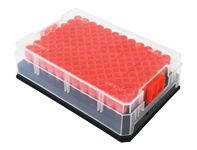
| A unique collection of 674 anticancer natural compounds for high throughput screening (HTS) and New anticancer drug research | ||
| Catalog No: | B91 | Anticancer Compound Library Screening Details |
| Size: | 1mg/well * 674 Compounds 2mg/well * 674 Compounds | |
| Cat. No. | Information |
| CFN99276 | DL-Syringaresinol (+)-Syringaresinol shows inhibitory activity of Helicobacter pylori motility with the IC50 value is 50 microg/ml. (-)-Syringaresinol has been reported to potently inhibit the proliferation of human promyelocytic HL-60 cells through G 1 arrest and induction of apoptosis, suggests that it may be a potential chemotherapeutic agent for the treatment of cancer. Syringaresinol induces vasorelaxation by enhancing NO production in endothelial cells via two distinct mechanisms, phosphatidylinositol 3-kinase/Akt- and (PLC)/Ca2+/CaMKKβ -dependent eNOS phosphorylation and Ca(2+)-dependent eNOS dimerization. Syringaresinol also can protect against hypoxia/reoxygenation-induced cardiomyocytes injury and death by destabilization of HIF-1α in a FOXO3-dependent mechanism. |
| CFN99321 | Psidial A Psidial A shows activity to enzyme PTP1B; it also reduces tumor growth and stimulate uterus proliferation. |
| CFN99332 | Salvianolic acid B Salvianolic acid B is a bioactive compound isolated from the Chinese medicinal herb Danshen, which is used for treating neoplastic and chronic inflammatory diseases in China, it shows a protective action against the ischemia-reperfusion induced injury in rat brain. It inhibited the expression of COX,ERK,TNF-α, NO. |
| CFN99347 | Bulleyanin Bulleyanin shows strong inhibition of mouse ehrlich ascites carcinoma (ECA), mouse sarcoma S-180, and mouse liver ascites. |
| CFN99356 | Cannabidiolic acid Cannabidiolic acid inhibits migration of the highly invasive MDA-MB-231 human breast cancer cells, apparently through a mechanism involving inhibition of cAMP-dependent protein kinase A, coupled with an activation of the small GTPase, RhoA. Cannabidiolic acid displays significantly greater potency at inhibiting vomiting in shrews and nausea in rats, and at enhancing 5-HT(1A) receptor activation; it also selectively inhibits cyclooxygenase (COX)-2 activity with an IC(50) value around 2 microM, has 9-fold higher selectivity than COX-1 inhibition. Cannabidiolic acid and cannabidiol have inhibitory actions on the intestines of S. murinus that are not neuronallymediated or mediated via CB1 or CB2 receptors. |

